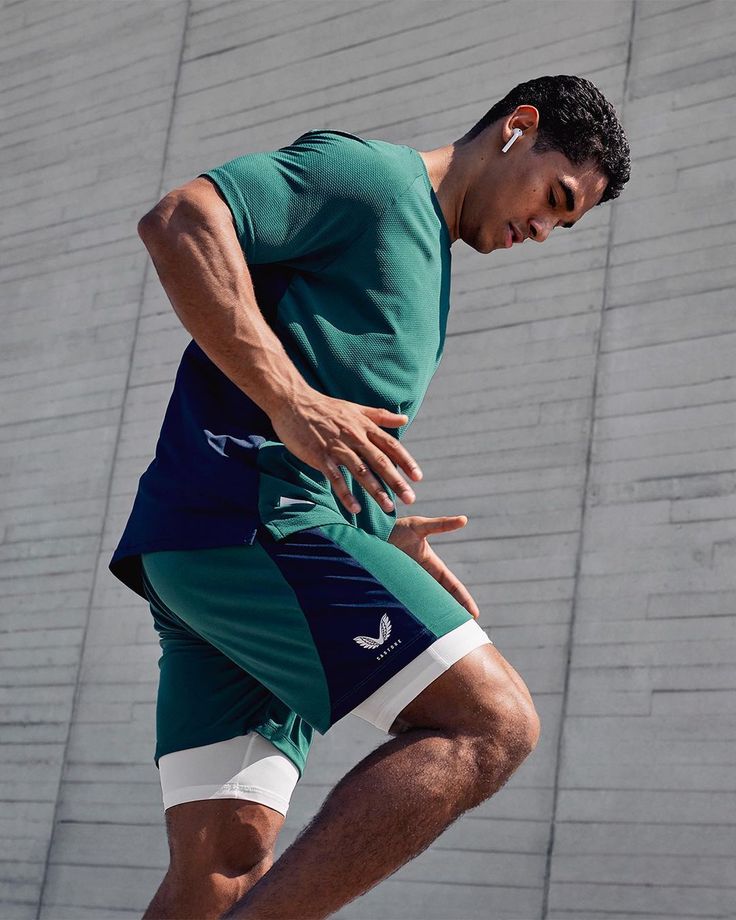
Castore: How a £190M Brand Nearly Lost Everything to Its Own Supply Chain
What the rise, the ripped kits, and the £28.8M loss can teach every scaling brand about operational infrastructure
Castore went from zero to £190M in revenue in under a decade. In the same year they achieved that revenue milestone, they posted a pre-tax loss of £28.8M, down from a profit of £14.6M the year before.
That is not a marketing problem. That is not a brand problem. That is an operation that could not keep pace with the ambition sitting on top of it.
Here is what happened, and more importantly, what every scaling brand can learn from it.
The rise
Founded in 2016 by brothers Tom and Phil Beahon, Castore built its identity around a simple but bold positioning: better performance sportswear, made properly, for serious athletes. The brand attracted Sir Andy Murray as an early investor, which gave it both credibility and profile at a stage when most sportswear startups are still trying to get their first wholesale account.
From there the partnerships came quickly. McLaren F1. Newcastle United. Aston Villa. England Cricket. Republic of Ireland Football. Saracens Rugby. Each one brought brand exposure, commercial revenue, and a validation that Castore was operating at the top end of the market.
On paper it looked like everything a scaling brand could want. Elite partnerships, growing revenue, genuine product credibility in a high growth category. The sportswear market was expanding, the brand was winning contracts that much larger companies would have competed for, and the trajectory was pointing in one direction.
Then the operation started showing up in the headlines.
When the supply chain failed publicly
The problem with supplying Premier League football clubs is that your quality failures do not happen quietly. They happen in front of 50,000 people in a stadium and a live television audience of millions.
In the 2023-24 season, Castore kits began ripping on players mid-match. Multiple incidents across different clubs and competitions. The images travelled fast. A torn shirt on a celebrating goalscorer is exactly the kind of moment that defines a brand's quality perception in the public consciousness, and not in a way that any marketing budget can recover.
Then came what the press called Sweatgate. Aston Villa's players, men's and women's teams both, complained that their Castore kits were absorbing so much sweat that the shirts were weighing them down during matches and affecting their performance. Villa's director of football operations acknowledged the problem publicly. Players reportedly did not want to wear the kit. For a brand built on the promise of performance sportswear, this was about as damaging as it gets.
Newcastle United had already seen enough. The club terminated their Castore kit deal ahead of schedule after receiving widespread complaints from supporters about merchandise quality, stock shortages at Castore stores in the city, poor customer service, and significant delivery delays on orders. Newcastle determined that the volume of complaints was reflecting badly on the club and moved to Adidas, signing a deal reportedly worth £40M a season for five years. A figure that illustrated exactly how far the gap had grown between what Castore was charging and what the market was willing to pay for a supplier who could actually deliver.
The numbers behind the story
The financial results for the year ending February 2024 told the full picture. Revenue had grown from £115M to £190.3M, a substantial increase that reflected the commercial momentum of the partnerships. But the extraordinary costs that came with trying to fulfil those commitments at scale had wiped out the operating profit entirely and then some.
Extraordinary costs topped £24.4M. This included £9M in stock write-offs, £2.1M in warehouse consolidation, £6.3M in fundraising expenses, and £3.8M attributed to onerous contracts. The operating profit of £16.5M from the prior year had collapsed to just £399,000. The pre-tax position swung from a profit of £14.6M to a loss of £28.8M.
Revenue going up. Losses going up faster.
This is the pattern that operational failure produces at scale. The commercial engine keeps running. The partnerships keep generating revenue. But underneath the top line, the cost of delivering on those commitments, the stock write-offs, the warehouse failures, the fulfilment problems, the quality remediation, erodes everything the revenue growth was supposed to build.
For the 18 months ending August 2025, revenue reached £334.6M on an annualised basis, a 17% increase. Losses after tax widened further to £40.3M. EBITDA improved significantly to £61.3M, suggesting the operational investment is beginning to translate commercially. But the journey from operational failure to operational stability is expensive and slow.
What went wrong operationally
Castore's core problem was not that the brand was bad or that the partnerships were wrong. The brand was good. The partnerships were right. The problem was that the operational infrastructure needed to deliver on those partnerships at scale was not built ahead of the demand. It was being built in response to it, while the demand was already arriving.
Supplying kit to Premier League clubs is operationally complex in ways that are easy to underestimate from the outside. You are producing technically demanding performance garments to exact specifications, under strict branding requirements, on tight seasonal timelines, for clubs with enormous public visibility and no tolerance for quality failures. The margin for error is essentially zero.
Scaling into that environment without the quality governance, supplier framework, and fulfilment infrastructure to support it is not a risk. It is a guarantee of failure. The only question is when and how publicly it shows up.
For Castore, it showed up live on television. It showed up in the form of a £40M contract terminating early. It showed up in a £9M stock write-off and a swing from profit to a £28.8M loss in a single year.
The response
To Castore's credit, they recognised the problem and responded with serious operational investment. A Chief Supply Chain Officer was appointed. In April 2024, GXO Logistics, the world's largest pure-play contract logistics provider, was brought in to manage Castore's UK warehousing and distribution operations. That partnership was expanded in February 2025 to cover global logistics across Castore's full network.
The brand also acquired Bestaff, a heritage sportswear brand, for £102M, a move that added both product range and infrastructure. The improving EBITDA figure suggests the operational work is starting to have a commercial effect.
But the investment required to fix an operation that was not built properly in the first place is always significantly larger than the investment required to build it properly from the start. The £9M stock write-off, the warehouse consolidation costs, the onerous contracts, the lost revenue from terminated partnerships. These are not just financial figures. They are the cost of operational decisions that were made, or not made, in the years before the problem became visible.
The lesson
Castore is both a cautionary tale and a recovery story. Which one it ultimately becomes depends on whether the operational infrastructure being built now is sufficient to carry the commercial ambition the brand has always had.
But the core lesson applies at every level of scale, from a £5M DTC brand shipping from a spare room to a £190M sportswear business supplying Premier League clubs.
Winning the contract is not the hard part. Delivering on it consistently, at scale, under pressure, in public. That is where the supply chain either earns its place or costs you everything you built.
The brands that get this right are not the ones with the best marketing or the most impressive partnership roster. They are the ones where someone was asking the hard operational questions before the volume arrived, not after it was already destroying margin and terminating contracts.
Castore had the brand. They had the partnerships. They had the demand.
What they needed earlier was an operation built to carry it.